
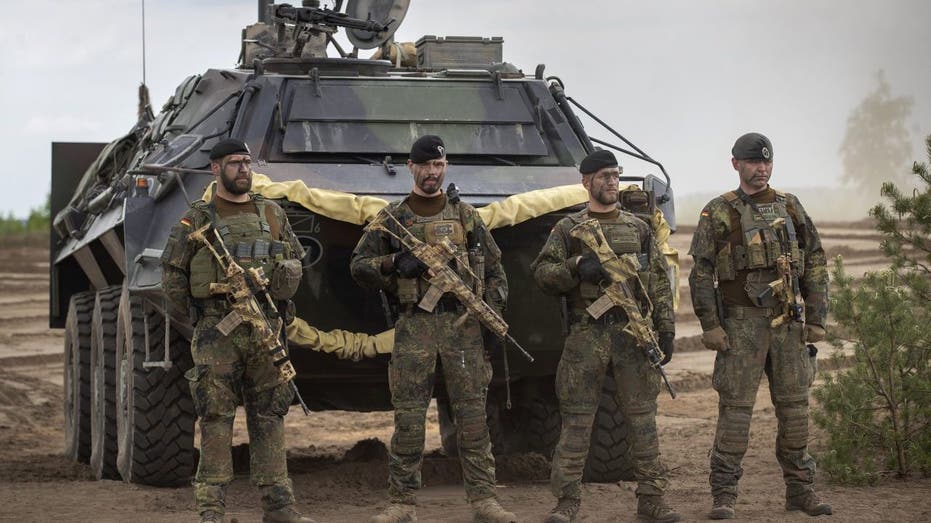
Facing direct threats and increased pressure from Washington to shoulder more of the collective defense burden, nations on NATO’s eastern edge are rapidly transforming their military capabilities. Poland, the Baltic states, and Romania are significantly outpacing their Western European counterparts in defense spending, with some frontline states aiming for total security investments approaching 5% of GDP by 2035. This shift is driven by a sense of geographic urgency, leading these countries to prioritize the immediate procurement of available military hardware over long-term domestic development programs.
Closing the Capability Gap
While the United Kingdom and Germany have begun to ramp up their budgets, the continent’s largest economies still face a significant gap in meeting new alliance benchmarks. These targets call for a tiered investment strategy: 3.5% for core defense requirements and an additional 1.5% for strategic infrastructure. Germany is increasingly viewed as the potential backbone of a future European defense industrial base, yet the transition from decades of minimal investment to a state of high readiness remains a monumental task for Western Europe’s political leadership.
Despite the surge in spending across the flank, Europe remains strategically dependent on the United States for critical high-end assets. Current capabilities in areas such as satellite intelligence, air-to-air refueling, and long-range logistics are still largely provided by American forces. Analysts suggest that while Europe is finally building the «first line» of its own defense, achieving true autonomy will require a massive rebuilding of human capital, equipment, and technological know-how that has diminished since the end of the Cold War.